Perdón por chingar con esto mis queridos, pero en español cuando las cosas nos parecen lógicas ó estamos de acuerdo con las cosas TIENEN SENTIDO, no HACEN SENTIDO. Al menos que estemos hablando Spanglish ó nos estemos volviendo perezosos.
Uno puede llegar a una situación confusa y lograr HACER SENTIDO DE LAS COSAS, hacer sentido de la vida, encontrarle el sentido a una relación, hacer sentido de la realidad, pero eso es un caso distinto.
En Inglish "things MAKE sense", in Spanish "las cosas tienen sentido." A mi me gusta hablar español. ¡Qué lindo es nuestro idioma!
Por si no sabían...
miércoles, 27 de mayo de 2015


lunes, 18 de mayo de 2015
Cuentos de un viajecito en bus por Costa Rica
Llevamos menos de 12 horas en Costa Rica y ya aprendimos que cualquier pendejo es un hijueputa. Nuestro chofer de Autobuses Mepe no se cayó un segundo desde que nos montamos al bus en San José hasta que llegamos a Puerto Viejo de Talamanca. Y no falto oración o cuento en la que no se refiriera a algo o alguien como "hijueputa" con la mayor levedad posible. Tal vez fue por esta habladera que nos hizo reír mucho que me tardo una hora y media el darme cuenta que encima nuestro en el maletero había pollitos piando.

El bus tenía más de la mitad llena con europeos y gringos por lo que nosotras no necesariamente resaltábamos como turistas. Aparte que no teníamos ni mecha bajo el brazo ni rastas añejas para delatarnos, como algunas de nuestras vecinas.
Saliendo de San José tuvimos que esperar por lo menos cuarenta minutos por algo que paso en "la pista" y en todo este tiempo el chofer no hizo sino decir y repetir que el pollito seguramente ya estaba poniendo huevos, sino empollando y con lo que demoramos casi le creo.
En el tráfico nos empezamos a percatar del calor tan berraco que se venia y fue cuando nos dimos cuenta que estábamos en los únicos puestos con ventana que no se podía abrir. ¡Qué interesante!
Cuando por fin comenzó a andar el tráfico después del trancón de 40 minutos saliendo de San José, el chofer comenzó a contar: "Tengo un poco de artritis, pero no crónica, sólo un poquito. Tengo un poquito de todo, un poco de ladron, un poco de honrado, un poco de bueno, un poco de mujeriego. Me gustan mucho las mujeres, pero como ahora estoy viejo pues no les gusto tanto. Y de joven me gustaban mucho, pero yo a ellas no tanto." A estas alturas supimos que sería un viaje entretenido.
Aprendí debido a su impecable proyección vocal que permitía que oyéramos todas sus conversaciones a cuatro filas de detras de el que es divorciado y tenía hijas por varios lados. Pero en algún momento la belleza de la selva nubosa bajando al Atlántico me cautivo y deje de ponerle atención al "Mae". Definitivamente las vistas son como de película de Jurassic Park o alguna vaina de esas que nunca logro ver completa, pero esto si me cautivo hasta que quede profunda y desperté poco antes de Limón en un paisaje tan verde y vivo como el otro.
Hubo tráfico y finalmente llegamos a una estación de buses donde supuestamente haríamos una parada dos horas antes. Rápido continuamos el viaje y mientras estábamos trabados en el segundo trancón entre Limón y Cahuita el choer re volvió a salvarme de la impaciencia al contar que le quiere enseñar a los monos a hablar. Un tipo le dijo, "los monos no hablan" pero el dijo que claro que si... Si uno les enseña." Quise que me contara como, pero luego se subió otro HP a darnos noticias. En la carretera mas adelante "balearon a un hijueputa, cuatro tiros" y nos alargo el paseo un poquito mas. Pobre hijueputa, pero la desviada hizo que el chofer comenzará a volar y pasar camiones y tráilers a lo loco. Entre esas hubo uno que paso a un pelo de que nos chocará otro que venia en contra nuestra. Y entonces dijo: "Usted ya sabe que a mi me cuesta mucho emocionarme, pero cuando pasé ese camión me emocione..."
Con esa emoción finalmente llegamos a Cahuita y finalmente el señor de los pollitos se bajo, un par de gringos también se bajaron y la emoción se mantuvo hasta llegar a Puerto Viejo, nuestra parada final. Acá nos recibió un mono capuchino pasando al lado de nuestra ventana y una mezcla de mar y selva la cosa más espectacular del mundo.
miércoles, 7 de enero de 2015
No nos sometamos al terrorismo
Sin importar si están o no de acuerdo con las opiniones de Charlie Hebdo tenemos que recordar que la base de un mundo libre es la libre expresión. El poder criticar CUALQUIER religión cuando entra al ámbito público al igual que a la autoridad es absolutamente vital para las sociedades libres. Este no es solo un ataque a periodistas y caricaturistas, sino un ataque a nuestra libertad. Mi corazón está con los Franceses! #jesuischarlie
lunes, 8 de septiembre de 2014
Germany; reflections on a blissful trip
Once again I found myself overwhelmed by the bliss of traveling. There were so many moments were I told myself, maybe I should write on my journal, maybe I should take a picture or update my blog; but the breezes, the sunsets, the company, the tastes and smells, my asthma, the conversations and moments were meant to be enjoyed and not interrupted by an attempt to immortalize them. Now that I am back almost recovered from my jet lag and getting back on my routine I can't help but think about these amazing months and have an impulse to write in order to reflect and remember.
A trip always starts with with a thought or an impulse. For me it is an urge to see places I have heard or read about, a need to get out of my routine and jump into a world that is unknown and which pushes me out of my comfort zone. It's almost an addiction, but one that can bring more clarity and happiness than any other. I had always dreamed about visiting Germany since I was a kid. I remember looking at picture of the Berlin wall, the Alps, listening to Beethoven and then seeing city names like Bonn, Hanover, Hamburg, Cologne and wondering how life would be in those places, what the cities would smell like, how the weather would be like and the how the people are. Lately I kept making friends with German Buddhist travelers and telling myself I got to go there soon, and so I started working on it.
After I made the decision to go there I found the volunteer gig at an organic farm, (which I previously wrote about) and started shooting emails to get a tentative itinerary down. I knew from previous experiences that it would be better to plan to visit only a few cities and make it to Germany before making to many fixed plans, and so I arrived to the farm. During my time there I was lucky to be able to travel with Gerd Boll to the places were he gave lectures on dharma and travel with other Buddhist friends to lectures and events which allowed me to get to see the region and meet local sanghas (Buddhist practitioners). I got to go to Hamburg one weekend, visit Kiel multiple times which allowed me to make really strong connections with the amazing people there, among other smaller towns and cities.
Staying in the farm for a month allowed me not only to loose at least 5 pounds from eating only organic and extremely healthy and well balanced meals, but also to experience life in the German country side, the pace, the food, the values, the changing weather. This place had a quiet and laid back pace which I had never experienced for more than just a few days. Having no internet, no car and being immersed in a community which spoke a language I wasn't fluent with was simply amazing. But the things I enjoyed the most was the quality of life and punctuality.
I think these two come hand in hand. Germans seem to have an internal time-measuring mechanism that allows them to know how long a task will take, and without the stress get ready for appointments and commitments right on time. I would have thought such punctuality would be accompanied by a certain degree of neurosis, but instead I found out that it simply makes life easier, makes you more reliable and relaxed as you don't have to be wondering when people will show up, or freaking out when you are running late. Consideration for other people's time is key and makes life so much easier! If they were running two minutes and thirty seconds late they would always call, text or send smoke signals, because everyone's time is precious. Of course when it comes to neurosis, I'm not saying all Germans are exempted... there were cases. But the ideas and stereotypes I had were challenged and changed, and my habits as well. Now I feel a certain degree of satisfaction when my bus is on time in Minneapolis and I can plan my bike ride to be where I have to be on time.

My relative isolation also made me enjoy the people. I think in this modern world sometimes we enjoy our friends across our iPhone or computer screens more than those we have in front of us sharing the here an now. Of course, I tell this to myself, and some of you may be exempt from this craziness, right? I only had access to cable internet at times when there was nobody around the kitchen where the connection was, because the main rule at the house was that the internet use should not interfere with socializing and meditation. I learned to sit, listen and relax which of course was also due to the fact that I didn't have enough German skills to babble like I would in English, Spanish, Portuguese or French. However the Germans I lived with were also amazing examples. Despite the hard work at the farm and their busy lives there was always time for wholeheartedly greeting and asking me about my day, sharing something about theirs and talking politics, soccer, dharma or teach me some useful German phrase. Of course this was life in the country side of Schleswig-Holstein.
I learned to enjoy naps, country side bike rides, walking through fields and pick my own berries for dessert, enjoy the morning coffee, the fresh air, conversation with friends, the cold Ost-See swims and simple visits to town to have ice-cream. I was all of the sudden not in need to run around doing something all the time, spending money or going crazy with sudden inactivity. However I would have loved to be in a big city during the World Cup final, but our barn "public-viewing" and champagne drinking was equally enjoyable and maybe safer than the streets of Hamburg, Cologne or Berlin.

After my month in Großholz another part of the adventure began and I started planning my trip to Rodby and Copenhagen. First I talked to an old acquaintance in Cologne and told him I would stop by for a couple of days. And as I said, it was good that I was flexible and had no fixed plans, because this old acquaintance became my boyfriend and after Copenhagen my plans would change a lot. But that's another story...
Cologne showed me a different face of Germany; a very multicultural and urban one. Kersten and I walked all over town and even though I was in a mild culture-shock coming back from rural Germany into a big city, I couldn't help but notice the relaxed and safe atmosphere there was in Cologne. Coming from the U.S. and Guatemala I was constantly weary of strangers in the streets, and a little nervous about walking around dark streets at night. Kersten had to remind me, "you're are in Germany". It took a while for it to sink in, but once it did I couldn't help but thing "Wow, this is life!"
Acknowledging that I did not hang out with every single citizen of Cologne, I have to say that I was fascinated by what I considered a very healthy life style, similar to that of my family in France. For instance I became amazed by Kersten's love of fresh brötchen, and the fact that there was a bakery on almost every corner, like Starbucks in Seattle. Fresh preservative free bread was the way to go. The day could rarely start without him walking to the bakery to get the famous bread for breakfast. But fresh bread by itself is not as exciting; there were no frozen foods, very little food in the refrigerator, farmer markets and fresh produce were bought daily, etc.
But my favorite thing was when I would see little kids drinking Apfelschorle (apple juice with gas) or simple Apfelsaft (apple juice) instead of Coke. I slowly started to notice that most corner stores did not have pop like Coke, Pepsi or 7 up, but instead very low sugar drinks like Club Mate (a hierba-mate tea drink with gas), Apfelschorle and Fassbrause which became some of my obsessions. There were also a lot of people jogging and biking like in Minneapolis. Perhaps it was a way to make up for the ridiculous amount of smoked tobacco. There is even a smoking booth in the Frankfurt airport. A small box inside a building were people go to smoke and inhale ten other smokers' concentrated smoke at the same time!

But enough nicotine-talk. Being interested in identity dynamics I was pleasantly surprised by how easily and yet tactful Germans would approach me and ask me where I was from. It was pretty obvious by looking at my non-blond, non-blue-eyed self that I was not from Germany yet I did not feel unwelcome or uncomfortable like I have sometimes felt in certain places in North America. The question wasn't meant to place me in some category, but to genuinely learn something about me. Most of the people who asked me where I was from knew where Colombia and Guatemala were and knew a thing or two about my countries like: "Tikal is an amazing Mayan archeological site, have you been there?" or... "I have heard Medellin is a beautiful city, and Bogota is interesting but very big and busy." or... "I have been to Colombia for a couple of weeks..."
I also appreciated the fact that most would consider my language limitations and switch to English, but most times I would quickly beg them to speak German and help me learn. They loved it!
The amount of Germans from so many different backgrounds who travel amazed me. And even more amazing was the fact that our conversations occurred in perfectly fluent English. Two German farmworkers I got to know well as we worked together at the farm told me about the trips they made when they were getting their degrees or certificates in farming or biology. They received state aid to study abroad or were able to save money doing farm work to travel to Israel, Australia, Spain, etc... I can't imagine a Guatemalan farm worker making money to even travel for leisure. Another thing that amazed me was their fearlessness when traveling, so many of them had crazy stories because they would never even conceive dangerous situations as the conditions in Germany are humane. For instance they would have never imagined that taking public transportation could be a "trip" in itself, like taking a chicken bus across Guatemala which sometimes can be like playing Russian roulette.
This was even more extreme when I visited Copenhagen and I met University students who not only did not pay for school at all, but did not have to pay for their study abroad programs in Kathmandu, Quito, Tokio or you name it. But Denmark is a different story. I'll have to write about later.
After Denmark I spent three weeks in the Alps at a Buddhist course setting up dinners, counting thousands of people who ate at the cafeteria and later cleaning up the service area after them. I met many amazing people, but lets just say I learned something about patience. I got to see my lama and experience Tibetan initiations for the first time in this life. I was able to pitch my tent in the one spot that would become a swamp after the first shower, stay warm during very wet and cold nights, take showers in front of twenty other women in a common shower, use the same toilet 2,000 others used on the same day and stay sane and happy. I enjoyed every bit of it, but by the end when my asthma was keeping me from going up the hill without stopping every five steps I could not wait to go back to Cologne and take a long hot shower by myself and sleep in a bed.

I then got to go to Berlin which was a big dream of mine. I wanted to see the places where so much of recent history had taken place. I did my share of memorial and museum visits, but my favorite part was staying in an apartment in Prenzlauer Berg and experiencing the neighborhood. Its music and noises from the cars in the morning, to the music coming from the Swingers Club downstairs or the neighbors' parties. Walking to the supermarket, taking the train Mitte or simply walking to a restaurant from any country in the world. And the amazing coffee everywhere I went, but especially the fact that Berliners seem to love dogs and dogs are welcome anywhere except hospitals and fancy restaurants. They are everywhere and by then I had finally learned to ask "May I pet your dog?" so I could indulge in petting some of the happiest dogs I have ever seen. The metropolitan touch did it for me. Quality of life, culture and history; I'm sold! But then my trip was coming to an end and I had to head back to Frankfurt, say goodbye to Kersten and fly across the Atlantic to my beautiful Minneapolis.
I know it has been a great trip when it does not stop when I get home. Instead I can enjoy life in Minneapolis with these new perspectives and lessons learned making every thing so much more exciting and fresh.
A trip always starts with with a thought or an impulse. For me it is an urge to see places I have heard or read about, a need to get out of my routine and jump into a world that is unknown and which pushes me out of my comfort zone. It's almost an addiction, but one that can bring more clarity and happiness than any other. I had always dreamed about visiting Germany since I was a kid. I remember looking at picture of the Berlin wall, the Alps, listening to Beethoven and then seeing city names like Bonn, Hanover, Hamburg, Cologne and wondering how life would be in those places, what the cities would smell like, how the weather would be like and the how the people are. Lately I kept making friends with German Buddhist travelers and telling myself I got to go there soon, and so I started working on it.
After I made the decision to go there I found the volunteer gig at an organic farm, (which I previously wrote about) and started shooting emails to get a tentative itinerary down. I knew from previous experiences that it would be better to plan to visit only a few cities and make it to Germany before making to many fixed plans, and so I arrived to the farm. During my time there I was lucky to be able to travel with Gerd Boll to the places were he gave lectures on dharma and travel with other Buddhist friends to lectures and events which allowed me to get to see the region and meet local sanghas (Buddhist practitioners). I got to go to Hamburg one weekend, visit Kiel multiple times which allowed me to make really strong connections with the amazing people there, among other smaller towns and cities.
Staying in the farm for a month allowed me not only to loose at least 5 pounds from eating only organic and extremely healthy and well balanced meals, but also to experience life in the German country side, the pace, the food, the values, the changing weather. This place had a quiet and laid back pace which I had never experienced for more than just a few days. Having no internet, no car and being immersed in a community which spoke a language I wasn't fluent with was simply amazing. But the things I enjoyed the most was the quality of life and punctuality.
I think these two come hand in hand. Germans seem to have an internal time-measuring mechanism that allows them to know how long a task will take, and without the stress get ready for appointments and commitments right on time. I would have thought such punctuality would be accompanied by a certain degree of neurosis, but instead I found out that it simply makes life easier, makes you more reliable and relaxed as you don't have to be wondering when people will show up, or freaking out when you are running late. Consideration for other people's time is key and makes life so much easier! If they were running two minutes and thirty seconds late they would always call, text or send smoke signals, because everyone's time is precious. Of course when it comes to neurosis, I'm not saying all Germans are exempted... there were cases. But the ideas and stereotypes I had were challenged and changed, and my habits as well. Now I feel a certain degree of satisfaction when my bus is on time in Minneapolis and I can plan my bike ride to be where I have to be on time.
My relative isolation also made me enjoy the people. I think in this modern world sometimes we enjoy our friends across our iPhone or computer screens more than those we have in front of us sharing the here an now. Of course, I tell this to myself, and some of you may be exempt from this craziness, right? I only had access to cable internet at times when there was nobody around the kitchen where the connection was, because the main rule at the house was that the internet use should not interfere with socializing and meditation. I learned to sit, listen and relax which of course was also due to the fact that I didn't have enough German skills to babble like I would in English, Spanish, Portuguese or French. However the Germans I lived with were also amazing examples. Despite the hard work at the farm and their busy lives there was always time for wholeheartedly greeting and asking me about my day, sharing something about theirs and talking politics, soccer, dharma or teach me some useful German phrase. Of course this was life in the country side of Schleswig-Holstein.
I learned to enjoy naps, country side bike rides, walking through fields and pick my own berries for dessert, enjoy the morning coffee, the fresh air, conversation with friends, the cold Ost-See swims and simple visits to town to have ice-cream. I was all of the sudden not in need to run around doing something all the time, spending money or going crazy with sudden inactivity. However I would have loved to be in a big city during the World Cup final, but our barn "public-viewing" and champagne drinking was equally enjoyable and maybe safer than the streets of Hamburg, Cologne or Berlin.
After my month in Großholz another part of the adventure began and I started planning my trip to Rodby and Copenhagen. First I talked to an old acquaintance in Cologne and told him I would stop by for a couple of days. And as I said, it was good that I was flexible and had no fixed plans, because this old acquaintance became my boyfriend and after Copenhagen my plans would change a lot. But that's another story...
Cologne showed me a different face of Germany; a very multicultural and urban one. Kersten and I walked all over town and even though I was in a mild culture-shock coming back from rural Germany into a big city, I couldn't help but notice the relaxed and safe atmosphere there was in Cologne. Coming from the U.S. and Guatemala I was constantly weary of strangers in the streets, and a little nervous about walking around dark streets at night. Kersten had to remind me, "you're are in Germany". It took a while for it to sink in, but once it did I couldn't help but thing "Wow, this is life!"
Acknowledging that I did not hang out with every single citizen of Cologne, I have to say that I was fascinated by what I considered a very healthy life style, similar to that of my family in France. For instance I became amazed by Kersten's love of fresh brötchen, and the fact that there was a bakery on almost every corner, like Starbucks in Seattle. Fresh preservative free bread was the way to go. The day could rarely start without him walking to the bakery to get the famous bread for breakfast. But fresh bread by itself is not as exciting; there were no frozen foods, very little food in the refrigerator, farmer markets and fresh produce were bought daily, etc.
But my favorite thing was when I would see little kids drinking Apfelschorle (apple juice with gas) or simple Apfelsaft (apple juice) instead of Coke. I slowly started to notice that most corner stores did not have pop like Coke, Pepsi or 7 up, but instead very low sugar drinks like Club Mate (a hierba-mate tea drink with gas), Apfelschorle and Fassbrause which became some of my obsessions. There were also a lot of people jogging and biking like in Minneapolis. Perhaps it was a way to make up for the ridiculous amount of smoked tobacco. There is even a smoking booth in the Frankfurt airport. A small box inside a building were people go to smoke and inhale ten other smokers' concentrated smoke at the same time!
But enough nicotine-talk. Being interested in identity dynamics I was pleasantly surprised by how easily and yet tactful Germans would approach me and ask me where I was from. It was pretty obvious by looking at my non-blond, non-blue-eyed self that I was not from Germany yet I did not feel unwelcome or uncomfortable like I have sometimes felt in certain places in North America. The question wasn't meant to place me in some category, but to genuinely learn something about me. Most of the people who asked me where I was from knew where Colombia and Guatemala were and knew a thing or two about my countries like: "Tikal is an amazing Mayan archeological site, have you been there?" or... "I have heard Medellin is a beautiful city, and Bogota is interesting but very big and busy." or... "I have been to Colombia for a couple of weeks..."
I also appreciated the fact that most would consider my language limitations and switch to English, but most times I would quickly beg them to speak German and help me learn. They loved it!
The amount of Germans from so many different backgrounds who travel amazed me. And even more amazing was the fact that our conversations occurred in perfectly fluent English. Two German farmworkers I got to know well as we worked together at the farm told me about the trips they made when they were getting their degrees or certificates in farming or biology. They received state aid to study abroad or were able to save money doing farm work to travel to Israel, Australia, Spain, etc... I can't imagine a Guatemalan farm worker making money to even travel for leisure. Another thing that amazed me was their fearlessness when traveling, so many of them had crazy stories because they would never even conceive dangerous situations as the conditions in Germany are humane. For instance they would have never imagined that taking public transportation could be a "trip" in itself, like taking a chicken bus across Guatemala which sometimes can be like playing Russian roulette.
This was even more extreme when I visited Copenhagen and I met University students who not only did not pay for school at all, but did not have to pay for their study abroad programs in Kathmandu, Quito, Tokio or you name it. But Denmark is a different story. I'll have to write about later.
After Denmark I spent three weeks in the Alps at a Buddhist course setting up dinners, counting thousands of people who ate at the cafeteria and later cleaning up the service area after them. I met many amazing people, but lets just say I learned something about patience. I got to see my lama and experience Tibetan initiations for the first time in this life. I was able to pitch my tent in the one spot that would become a swamp after the first shower, stay warm during very wet and cold nights, take showers in front of twenty other women in a common shower, use the same toilet 2,000 others used on the same day and stay sane and happy. I enjoyed every bit of it, but by the end when my asthma was keeping me from going up the hill without stopping every five steps I could not wait to go back to Cologne and take a long hot shower by myself and sleep in a bed.
I then got to go to Berlin which was a big dream of mine. I wanted to see the places where so much of recent history had taken place. I did my share of memorial and museum visits, but my favorite part was staying in an apartment in Prenzlauer Berg and experiencing the neighborhood. Its music and noises from the cars in the morning, to the music coming from the Swingers Club downstairs or the neighbors' parties. Walking to the supermarket, taking the train Mitte or simply walking to a restaurant from any country in the world. And the amazing coffee everywhere I went, but especially the fact that Berliners seem to love dogs and dogs are welcome anywhere except hospitals and fancy restaurants. They are everywhere and by then I had finally learned to ask "May I pet your dog?" so I could indulge in petting some of the happiest dogs I have ever seen. The metropolitan touch did it for me. Quality of life, culture and history; I'm sold! But then my trip was coming to an end and I had to head back to Frankfurt, say goodbye to Kersten and fly across the Atlantic to my beautiful Minneapolis.
I know it has been a great trip when it does not stop when I get home. Instead I can enjoy life in Minneapolis with these new perspectives and lessons learned making every thing so much more exciting and fresh.
jueves, 26 de junio de 2014
First impressions of my organic farming experience at a rural Buddhist community in Germany
So here it goes, my first blog since I began my organic farming experience at a rural Buddhist community in Germany. I still think it is a little bit random, but nevertheless amazing that I ended up here. It all started with the realization that I want to have some level of responsibility, tasks and a schedule during my break to make it more productive and meaningful than the summers before. I asked around and searched the web for jobs in anthropology or music, but for the amount of time and the time of the year it was almost impossible to find something like an internship. So I began searching for something I could do that involved my Buddhist practice and would give me some space to develop and clear my mind before graduation.
So our wonderful Diamond Way teacher Gerd Boll was the first idea my dad threw my way and I went with it. He offered me a volunteer gig with a place to stay, food and enough time to meditate during the day. And given that I have been obsessed with the idea of visiting Germany and have great admiration for the way Buddhist teachings have flourished in this country it wasn't a very hard choice given the amazing offering. I have been here for 12 days and a few impressions and reflections I've had motivated me to sit down and start writing about this in case it might inspire other organic farming friends, Buddhists, or anyone else who might come across my writing.
The farm is at least 20 minutes by car from the nearest town called Eckernförde which lies on a bay in the Baltic Sea. Despite the relative isolation there's always a lot of activity around with at least 20 seasonal workers from many Eastern European countries, especially Poland and former Soviet Union territories living in the land. Some of them are Buddhist practitioners and some are here for the jobs the farm offers during the summer time. This already makes for an interesting experience for a big city girl like me who has always been terrified of the "apathy" of suburban life, and even more petrified about the idea of not being able to run to a corner store or pharmacy to buy random shit I really don't need.
My first day I noticed that the food left for me at the retreat kitchen was all organic, vegetarian and with German labels. I should mention then that I have never visited a German speaking country before and have only taken one semester of German and 11 levels of duolingo before arriving. Of course for the carnivore I am, my first thought was to head over to the town the next morning and get some meat and some other random toiletries and snacks that I apparently didn't need because I already forgot about them. Little did I know that I was at least two hours away by foot from the town and that everything closes after 5 PM so going on a random shopping spree is impossible.

My first day or two of work were another interesting linguistic adventure. out of the eight people working the strawberry fields six are Polish, one is Russian and then me. All with beautiful unpronounceable names that are slowly starting to click in my ears. One of my colleagues who I would describe as the alpha female is convinced that the louder she speaks in Polish the more I will understand what she says. The good thing is she always screams with a beautiful big smile and offers help and comments even though I still don't have the slightest clue what she is saying. Something about strawberries, "Erdbeere"... Non of them speaks fluent German or any German at all, but know pretty well their berry picking vocabulary so they understand things better than me.

The only one I can relatively communicate to is a young man from Tajikistan who speaks a little German and has the patience to pay attention to my 3-year-old fluency in German, which saved my life this morning during a rainstorm by telling me there were rain jackets in the shed after I asked him where he got his auf Deutsch! There are a lot of smiles which are cheesily better than words, but yesterday morning two of my berry-picking colleagues came to me and said "good morning", and I got excited and handed them buckets for discarding the nasty moldy berries we find on the fields and they said "Thank you very much". Somehow such a simple effort to communicate from them warmed my heart after 10 days of working in silence and the company of my delicious podcasts for five hours a day.
I have to admit however that I keep eavesdropping, and although I don't understand a "shit" I do understand "Kurva". After watching my colleagues drop boxes of strawberries or complain loudly and continuously repeat "Kurva! Kurva! ..." I just assumed it was an equivalent of shit, f@#% or something juicy and expressive like that, and indeed it was. If I stayed a whole year I could learn Polish I guess, but my afternoons are filled with German love! Being a guest at the retreat house I have shared the place with seven beautiful German Buddhists who have already earned a special place in my heart, but today I have the time to write only because they are all gone.
I have been exposed to Autobahn-speed German conversations from day one which has forced me to shut my mouth and learn to listen carefully. Of course the listening carefully does not mean by all means that I understand. Lets put it this way, I began by understanding a word out of an entire sentence and making the rest up and now almost two weeks later I'm understanding the sense of a sentence and making only a few words up. However my tongue is still tied as speaking a word of German besides "Danke" and basic greetings scares me to death. But we're getting there, this is just a phase!
All meditations here are obviously guided in German so I've given myself the challenge of learning new dharma related words everyday, and now I'm starting to need my English booklets less and less and just enjoy the German sounds which start to somehow make sense. I'm now even able to understand conversations about dharma in German among the sangha. Most of my sangha speaks fluent English, even though they judge themselves to harshly and get all self conscious about their English all the time. This has definitely saved my life as I would be seriously bored to death if I couldn't at least chat a little bit with someone about something besides "Erdbeere". They are all wonderful. Maria who is about my age brought me a German-English dharma dictionary to help me out, Ergin who loves to hear me speak Spanish brought me a Long Life prayer from Lopon Checho to Lama Ole last night, and all of them are always hugging me, smiling and bringing a lot of warmth and love to my days at the retreat house.
It is amazing however how this situation of relative linguistic isolation has filtered my speech and even changed my thoughts in what I would consider a good way. At least on the basic level of cause and effect. With my developing German skills I can't fluently critique or complain about futile feelings, emotions and situations. Because non of them are Spanish or English native speakers or have lived and studied in Spanish or English speaking countries our ability to talk about these futile topics is limited, and instead all of our conversations are positive, encouraging and I think constructive. The amazing thing for me is that not having these conversations is also changing the way I think. The few frustrations that have arisen during my stay have been neutralized by what I naively first called "lazyness", but then realized after listening to some of Lama Ole's lectures is "wisdom". Haha! Why think the Polish-alpha-female doesn't like me or thinks I'm stupid? Instead she knows what she is doing and she sees I have no experience in farm work and decides to help me. If she gets a little exasperated that's her own problem, all I can do is smile and laugh at the ridiculous situations that arise and enjoy every second of them.

This stay has also messed with the concepts I had of my own habits, my schedule and time management. I am now waking up early everyday to have breakfast and coffee which was a totally foreign concept in my world. I work until 1 PM and then have lunch with Gerd's family and all the farm workers which is simply wonderful. (I'll have to write more about just that next time) After lunch I nap for half hour and then meditate for a couple of hours by myself before the whole sangha meets for 16th Karmapa meditation in the evenings, and afterwards I find time to study German, read a little bit and send a message home to my parents and brother. Somehow I am able to be productive and relaxed at the same time which I attribute to the amazing example of highly productive, happy people you see in this part of Germany, especially at the farm, and of course the 4+ hours of meditation everyday. It only reminds me of why as Buddhists we take refuge in the sangha, seeing so many great people around me makes me want to work harder.

With this being said I understand that this is a retreat, much like a laboratory in which I have the ability to generate the conditions with which I'm able to work with my mind, change certain habits and replace them with nicer ones and recognize attitudes and tendencies I've always had. Now the challenge is to drill these habits so that hopefully something sticks once I jump back into my last semester of university studies and the normal amount of stress and disturbing emotions of "everyday" life. With that being said, I'm going to hit the cushion now so I have time to shower and look decent by the time the sangha arrives to meditate together in a couple of hours and keep enjoying the rest of my stay here. And if you're in Germany come visit, I wouldn't mind having some housemates in the next couple of weeks. I promise to cook you a nice vegetarian dinner!
So our wonderful Diamond Way teacher Gerd Boll was the first idea my dad threw my way and I went with it. He offered me a volunteer gig with a place to stay, food and enough time to meditate during the day. And given that I have been obsessed with the idea of visiting Germany and have great admiration for the way Buddhist teachings have flourished in this country it wasn't a very hard choice given the amazing offering. I have been here for 12 days and a few impressions and reflections I've had motivated me to sit down and start writing about this in case it might inspire other organic farming friends, Buddhists, or anyone else who might come across my writing.
The farm is at least 20 minutes by car from the nearest town called Eckernförde which lies on a bay in the Baltic Sea. Despite the relative isolation there's always a lot of activity around with at least 20 seasonal workers from many Eastern European countries, especially Poland and former Soviet Union territories living in the land. Some of them are Buddhist practitioners and some are here for the jobs the farm offers during the summer time. This already makes for an interesting experience for a big city girl like me who has always been terrified of the "apathy" of suburban life, and even more petrified about the idea of not being able to run to a corner store or pharmacy to buy random shit I really don't need.
My first day I noticed that the food left for me at the retreat kitchen was all organic, vegetarian and with German labels. I should mention then that I have never visited a German speaking country before and have only taken one semester of German and 11 levels of duolingo before arriving. Of course for the carnivore I am, my first thought was to head over to the town the next morning and get some meat and some other random toiletries and snacks that I apparently didn't need because I already forgot about them. Little did I know that I was at least two hours away by foot from the town and that everything closes after 5 PM so going on a random shopping spree is impossible.
My first day or two of work were another interesting linguistic adventure. out of the eight people working the strawberry fields six are Polish, one is Russian and then me. All with beautiful unpronounceable names that are slowly starting to click in my ears. One of my colleagues who I would describe as the alpha female is convinced that the louder she speaks in Polish the more I will understand what she says. The good thing is she always screams with a beautiful big smile and offers help and comments even though I still don't have the slightest clue what she is saying. Something about strawberries, "Erdbeere"... Non of them speaks fluent German or any German at all, but know pretty well their berry picking vocabulary so they understand things better than me.
The only one I can relatively communicate to is a young man from Tajikistan who speaks a little German and has the patience to pay attention to my 3-year-old fluency in German, which saved my life this morning during a rainstorm by telling me there were rain jackets in the shed after I asked him where he got his auf Deutsch! There are a lot of smiles which are cheesily better than words, but yesterday morning two of my berry-picking colleagues came to me and said "good morning", and I got excited and handed them buckets for discarding the nasty moldy berries we find on the fields and they said "Thank you very much". Somehow such a simple effort to communicate from them warmed my heart after 10 days of working in silence and the company of my delicious podcasts for five hours a day.
I have to admit however that I keep eavesdropping, and although I don't understand a "shit" I do understand "Kurva". After watching my colleagues drop boxes of strawberries or complain loudly and continuously repeat "Kurva! Kurva! ..." I just assumed it was an equivalent of shit, f@#% or something juicy and expressive like that, and indeed it was. If I stayed a whole year I could learn Polish I guess, but my afternoons are filled with German love! Being a guest at the retreat house I have shared the place with seven beautiful German Buddhists who have already earned a special place in my heart, but today I have the time to write only because they are all gone.
I have been exposed to Autobahn-speed German conversations from day one which has forced me to shut my mouth and learn to listen carefully. Of course the listening carefully does not mean by all means that I understand. Lets put it this way, I began by understanding a word out of an entire sentence and making the rest up and now almost two weeks later I'm understanding the sense of a sentence and making only a few words up. However my tongue is still tied as speaking a word of German besides "Danke" and basic greetings scares me to death. But we're getting there, this is just a phase!
All meditations here are obviously guided in German so I've given myself the challenge of learning new dharma related words everyday, and now I'm starting to need my English booklets less and less and just enjoy the German sounds which start to somehow make sense. I'm now even able to understand conversations about dharma in German among the sangha. Most of my sangha speaks fluent English, even though they judge themselves to harshly and get all self conscious about their English all the time. This has definitely saved my life as I would be seriously bored to death if I couldn't at least chat a little bit with someone about something besides "Erdbeere". They are all wonderful. Maria who is about my age brought me a German-English dharma dictionary to help me out, Ergin who loves to hear me speak Spanish brought me a Long Life prayer from Lopon Checho to Lama Ole last night, and all of them are always hugging me, smiling and bringing a lot of warmth and love to my days at the retreat house.
It is amazing however how this situation of relative linguistic isolation has filtered my speech and even changed my thoughts in what I would consider a good way. At least on the basic level of cause and effect. With my developing German skills I can't fluently critique or complain about futile feelings, emotions and situations. Because non of them are Spanish or English native speakers or have lived and studied in Spanish or English speaking countries our ability to talk about these futile topics is limited, and instead all of our conversations are positive, encouraging and I think constructive. The amazing thing for me is that not having these conversations is also changing the way I think. The few frustrations that have arisen during my stay have been neutralized by what I naively first called "lazyness", but then realized after listening to some of Lama Ole's lectures is "wisdom". Haha! Why think the Polish-alpha-female doesn't like me or thinks I'm stupid? Instead she knows what she is doing and she sees I have no experience in farm work and decides to help me. If she gets a little exasperated that's her own problem, all I can do is smile and laugh at the ridiculous situations that arise and enjoy every second of them.
This stay has also messed with the concepts I had of my own habits, my schedule and time management. I am now waking up early everyday to have breakfast and coffee which was a totally foreign concept in my world. I work until 1 PM and then have lunch with Gerd's family and all the farm workers which is simply wonderful. (I'll have to write more about just that next time) After lunch I nap for half hour and then meditate for a couple of hours by myself before the whole sangha meets for 16th Karmapa meditation in the evenings, and afterwards I find time to study German, read a little bit and send a message home to my parents and brother. Somehow I am able to be productive and relaxed at the same time which I attribute to the amazing example of highly productive, happy people you see in this part of Germany, especially at the farm, and of course the 4+ hours of meditation everyday. It only reminds me of why as Buddhists we take refuge in the sangha, seeing so many great people around me makes me want to work harder.
With this being said I understand that this is a retreat, much like a laboratory in which I have the ability to generate the conditions with which I'm able to work with my mind, change certain habits and replace them with nicer ones and recognize attitudes and tendencies I've always had. Now the challenge is to drill these habits so that hopefully something sticks once I jump back into my last semester of university studies and the normal amount of stress and disturbing emotions of "everyday" life. With that being said, I'm going to hit the cushion now so I have time to shower and look decent by the time the sangha arrives to meditate together in a couple of hours and keep enjoying the rest of my stay here. And if you're in Germany come visit, I wouldn't mind having some housemates in the next couple of weeks. I promise to cook you a nice vegetarian dinner!
lunes, 12 de mayo de 2014
A different strain of Mexican
Despite some friends' beliefs I am not a burrito connoisseur, nor do I have Mexican parties with sombreros, nor do I celebrate Cinco de Mayo or Día de los Muertos. I am different strain of "Mexican", called Colombian-Guatemalan. And other than speaking Spanish and liking soccer I'm not very Mexican at all, in fact Colombia is a separate country with different people like England and the United States, or francophone Switzerland and francophone Belgium.
If you want recommendations on a Mexican restaurant or perhaps how to party like a Mexican you could Yelp it or Google it and then invite me. I'm also curious and interested in learning about Mexican culture. And I'm positive that there is more to it than Chipotle, Taco Bell, Tequila, telenovelas and sombreros. In fact I've visited Mexican land and the food is nothing like Chipotle or Taco Bell, is heavenly! You'd be surprised.
Take note...
If you want recommendations on a Mexican restaurant or perhaps how to party like a Mexican you could Yelp it or Google it and then invite me. I'm also curious and interested in learning about Mexican culture. And I'm positive that there is more to it than Chipotle, Taco Bell, Tequila, telenovelas and sombreros. In fact I've visited Mexican land and the food is nothing like Chipotle or Taco Bell, is heavenly! You'd be surprised.
Take note...
miércoles, 1 de enero de 2014
Happy New Year and best wishes!
Now is the time of the year when everyone gets all worked up over a number, the truth is from 11:59 on December 31, 2013 to 12:00 on January 1, 2014 we will still be the same, unless we, ourselves change things. Unfortunately a change in a calendar month or year won't fix all your problems, get rid of your not so pleasant habits, give you all the things you have always wished for, get you good friends and partners, or make you the amazing human being you have always wanted to be.
However this is not a rant about our New Year's resolutions, nor as depressing as I may have already made it sound like. I actually just feel like reminding myself of something I want to keep reminding myself everyday for the rest of my life. Not just for what remains of 2013: We are what we have thought, said and done. And the only way we can change our lives is by changing things now, not waiting for 12:00 AM on the 1st of January to come and expect some kind of external power to change our lives.
I am no saint, nor have I reached every goal I've set for myself this year, nor have I fulfilled every dream I've ever had but this year definitely showed me in very tangible ways that I can change things starting with daily actions that get me out of my lazy and conformist states of mind.
I am happy to reach this symbolic finish line, because I have been inspired by amazing friends who are compassionate, intelligent, strong, talented, passionate, hardworking and persistent in their causes and lives. Friends and family who guided me but didn't keep me from figuring out that I'm the on who needs to get my shit together and that I'm actually able to do it.
But more than having been inspired by their words, I was inspired by their actions. By friends who like anyone else, had great accomplishments, as well as shitty moments in 2013 but looked for new ways and kept working their butts off, bringing limitless new possibilities to their beautiful lives and those of others around them. I'm grateful for all of the people and situations this year. You're truly amazing, inspiring and helpful beyond words!
I have many goals like everyone else, and I'm very excited and motivated because I have already started working on them and just wish that they will bloom in 2014. Some of my goals are very generic, but what can we do if we all wish for happiness and health in our lives?
This year I lost 35 pounds and will lose the remaining 25 in 2014; I have been studying German for a semester and doing duolingo daily and hope to be able to hold a conversation in German by July; some friends and I started a 30 day meditation challenge that turned into a 120+ day challenge and I wish to finish prostrations this year; I wrote songs, arranged and performed music with friends in 2013 and hope to further my music career in 2014; I let go of difficult situations and wish to have the wisdom to keep doing this and open up to better situations and possibilities in 2014.
There are always new things to hope and wish for, but I'm happy to reach this symbolic finish line knowing I'm not starting from scratch, but I still have the possibility to change things and accomplish good things. Wish you all the best: limitless opportunities in your career and life, good health to you and your loved ones, and enough stability to face challenges with wisdom and compassion.
Much love!
However this is not a rant about our New Year's resolutions, nor as depressing as I may have already made it sound like. I actually just feel like reminding myself of something I want to keep reminding myself everyday for the rest of my life. Not just for what remains of 2013: We are what we have thought, said and done. And the only way we can change our lives is by changing things now, not waiting for 12:00 AM on the 1st of January to come and expect some kind of external power to change our lives.
I am no saint, nor have I reached every goal I've set for myself this year, nor have I fulfilled every dream I've ever had but this year definitely showed me in very tangible ways that I can change things starting with daily actions that get me out of my lazy and conformist states of mind.
I am happy to reach this symbolic finish line, because I have been inspired by amazing friends who are compassionate, intelligent, strong, talented, passionate, hardworking and persistent in their causes and lives. Friends and family who guided me but didn't keep me from figuring out that I'm the on who needs to get my shit together and that I'm actually able to do it.
But more than having been inspired by their words, I was inspired by their actions. By friends who like anyone else, had great accomplishments, as well as shitty moments in 2013 but looked for new ways and kept working their butts off, bringing limitless new possibilities to their beautiful lives and those of others around them. I'm grateful for all of the people and situations this year. You're truly amazing, inspiring and helpful beyond words!
I have many goals like everyone else, and I'm very excited and motivated because I have already started working on them and just wish that they will bloom in 2014. Some of my goals are very generic, but what can we do if we all wish for happiness and health in our lives?
This year I lost 35 pounds and will lose the remaining 25 in 2014; I have been studying German for a semester and doing duolingo daily and hope to be able to hold a conversation in German by July; some friends and I started a 30 day meditation challenge that turned into a 120+ day challenge and I wish to finish prostrations this year; I wrote songs, arranged and performed music with friends in 2013 and hope to further my music career in 2014; I let go of difficult situations and wish to have the wisdom to keep doing this and open up to better situations and possibilities in 2014.
There are always new things to hope and wish for, but I'm happy to reach this symbolic finish line knowing I'm not starting from scratch, but I still have the possibility to change things and accomplish good things. Wish you all the best: limitless opportunities in your career and life, good health to you and your loved ones, and enough stability to face challenges with wisdom and compassion.
Much love!
viernes, 26 de julio de 2013
Reflexiones acerca del festival de la canción del arte iberoamericana
No soy de aquellas que se siente a reflexionar como primer impulso después de cada experiencia, pero hoy me preguntaron por lo más importante que aprendí durante mi curso de repertorio vocal Iberoamericano en Barcelona y me dió gusto hacerlo. Y en este caso es extrañamente lo que no aprendí lo que considero más importante. Como la musicologa y directora del programa Patricia Caicedo nos dijo una y otra vez, esto sólo es una probadita para que sigan explorando por su cuenta. Y asi es, lo más importante que aprendí acerca de nuestra canción del arte Iberoamericana es que no está a nuestra disposición sin tener que batallar un poco e ir más allá del endiosado legado Francés, Alemán e Italiano que ningun conservatorio o bibioteca de música ignora.
Como ya se sabe la historia es escrita por aquellos en el poder y la historia al igual que la conservación de las artes y en este caso la música nos lo confirma. Sólo basta con señalar cualquier país del mundo afuera de la Europa occidental y preguntarse a si mismo si hay siquiera un compositor que venga en mente. Por supuesto que al hablar de música lírica ó la canción del arte ya se esta de por sí limitando la música vocal de manera dramática, usando estándares occidentales y especificamente provenientes de estas tres culturas Europeas ya mencionadas.
Me atrevo a decir que el mismo estándar de la canción del arte al coexistir con músicas folclóricas en Iberoamerica ayudó a que lo que resaltara de la música de estas regiones fuera aquello que era más diferente y más exótico para los oídos "occidentales" con escalas, ritmos y armonías "indígenas" de cada región como si no existieran elementos indígenas en las artes "occidentales". Al pasar esto entonces las expresiones autoctonas de canción del arte fueron ignoradas y olvidadas y algunas veces consideradas como música que no llegaba a la altura de sus contemporáneos franceses, italianos o alemanes siendo que la mayor parte de nuestros compositores recibieron educación de conservatorio Europeo como cualquier Mozart, Schumman, Fauré ó Debussy. Tuve la impresión muchas veces al escuchar algunas canciones durante el curso de estar escuchando un cierto deje de Debussy en las armonías etereas de compositores como Jaime León Ferro, ó de escuchar canzonas de Caccini en compositores argentinos y brasileños del siglo XVIII.
Pero no es lo parecido o "europeo" de esta música que me tocó el alma, sino exactamente la incorporación de lo indígena a la música académica iberoamericana que la hace brillas como un tesoro que empieza a brillar conforme gente como Patricia lo descubre, canta y promueve. Al igual como los franceses utilizaron danzas y se inspiraron en melodías campesinas o cantos de pescadores en ocasiones, los compositores académicos iberoamericanos logran expresar al nuevo mundo y la península iberica en sus composiciones y arreglos como Federico García Lorca lo logra en su arreglo de la Nana de Sevilla basado en cantos gitanos de Andalucia.
Y no es un error, si me refiero al mismisímo García Lorca, poeta y dramaturgo de la generación del 27 lo que me lleva a otra de las importantes lecciones de este curso. Aparte de Silvestre Revuetas, Enrique Granados o Carlos Guastavino nunca había escuchado ni música académica Iberoamerricana ni mucho menos los nombres de compositores en mi educación de conservatorio "europea" en Estados Unidos por las razones que he tratado de explicar.
Adémas de la obvia falta de atención a este maravilloso repertorio al que fui expuesta únicamente porque yo misma busque recurso, no porque me los hubieran presentado asi no más, fui expuesta a un interesante dilema de la musicología: donde termina el folklor y comienza la música académica. Entre el repertorio que me fue asignado y tuve que aprender para el festival y los cursos tuve algunas piezas como Cortadero Plumerito de Carlos Guastavino o As tuas mãos de Lorenzo Fernandez que me transportaban directamente a la Argentina o a Brasil por su aire a canción popular. Por supuesto que las canciones fueron escritas para una voz impostada con técnica europea, tenían ciertas estructuras, pero sobretodo estaban escritas o transcritas con el sistema de notación europeo lo cual las diferencia de cualquier pieza que forme parte de la transmisión oral de una región.
Estas discusiones tratando de definir lo académico y lo folklórico o autóctono me despertó aún más inquietudes no solo antropológicas sino también de mi propio arte y expresión por medio de la música. Entre las ideas a las cuales fui expuesta estaba la de la falta de oportunidades para la expresión o creatividad en la educación musical académica ya que los músicos populares o folclóricos aprenden música al oído o con parámetros muy vagos tales como rondas de acordes o patrones rítmicos lo cual les permite ejecutar música distinta cada vez que tocan la misma canción. Por supuesto que con mi entrenamiento vocal de soprano se que las cosas no son blanco y negro como esta idea lo presenta ya que inclusive en la música notada nota por nota de manera exacta queda aún un espacio para la expresión personal con recursos tales como la actuación, las pausas, las dinámicas, las improvisaciones con cadenzas, etc... Lo que sí es que inclusive en la expresión iberoamericana de la canción del arte existe todavía el hecho de que para hacer esta música se necesita una cierta preparación y educación que no se consigue de manera oral, ya de por sí volviéndola música de una cierta elite aunque en algunos casos la música sea comprensible y agradable para públicos más amplios.
Ya tengo esa semillita dentro de mi de seguir investigando la música iberoamericana académica y explorar más las expresiones folklóricas de estas regiones, pero mi más grande deseo es que los que me lean o oigan hablar de esta música consideren investigar más acerca de sus compositores académicos locales, me pregunten o consigan formas de volver este repertorio tan valioso parte del canon estudiado en nuestros conservatorios.
Para más información
Barcelona Festival of Song - http://www.barcelonafestivalofsong.com/es
Como ya se sabe la historia es escrita por aquellos en el poder y la historia al igual que la conservación de las artes y en este caso la música nos lo confirma. Sólo basta con señalar cualquier país del mundo afuera de la Europa occidental y preguntarse a si mismo si hay siquiera un compositor que venga en mente. Por supuesto que al hablar de música lírica ó la canción del arte ya se esta de por sí limitando la música vocal de manera dramática, usando estándares occidentales y especificamente provenientes de estas tres culturas Europeas ya mencionadas.
Me atrevo a decir que el mismo estándar de la canción del arte al coexistir con músicas folclóricas en Iberoamerica ayudó a que lo que resaltara de la música de estas regiones fuera aquello que era más diferente y más exótico para los oídos "occidentales" con escalas, ritmos y armonías "indígenas" de cada región como si no existieran elementos indígenas en las artes "occidentales". Al pasar esto entonces las expresiones autoctonas de canción del arte fueron ignoradas y olvidadas y algunas veces consideradas como música que no llegaba a la altura de sus contemporáneos franceses, italianos o alemanes siendo que la mayor parte de nuestros compositores recibieron educación de conservatorio Europeo como cualquier Mozart, Schumman, Fauré ó Debussy. Tuve la impresión muchas veces al escuchar algunas canciones durante el curso de estar escuchando un cierto deje de Debussy en las armonías etereas de compositores como Jaime León Ferro, ó de escuchar canzonas de Caccini en compositores argentinos y brasileños del siglo XVIII.
Pero no es lo parecido o "europeo" de esta música que me tocó el alma, sino exactamente la incorporación de lo indígena a la música académica iberoamericana que la hace brillas como un tesoro que empieza a brillar conforme gente como Patricia lo descubre, canta y promueve. Al igual como los franceses utilizaron danzas y se inspiraron en melodías campesinas o cantos de pescadores en ocasiones, los compositores académicos iberoamericanos logran expresar al nuevo mundo y la península iberica en sus composiciones y arreglos como Federico García Lorca lo logra en su arreglo de la Nana de Sevilla basado en cantos gitanos de Andalucia.
Y no es un error, si me refiero al mismisímo García Lorca, poeta y dramaturgo de la generación del 27 lo que me lleva a otra de las importantes lecciones de este curso. Aparte de Silvestre Revuetas, Enrique Granados o Carlos Guastavino nunca había escuchado ni música académica Iberoamerricana ni mucho menos los nombres de compositores en mi educación de conservatorio "europea" en Estados Unidos por las razones que he tratado de explicar.
Adémas de la obvia falta de atención a este maravilloso repertorio al que fui expuesta únicamente porque yo misma busque recurso, no porque me los hubieran presentado asi no más, fui expuesta a un interesante dilema de la musicología: donde termina el folklor y comienza la música académica. Entre el repertorio que me fue asignado y tuve que aprender para el festival y los cursos tuve algunas piezas como Cortadero Plumerito de Carlos Guastavino o As tuas mãos de Lorenzo Fernandez que me transportaban directamente a la Argentina o a Brasil por su aire a canción popular. Por supuesto que las canciones fueron escritas para una voz impostada con técnica europea, tenían ciertas estructuras, pero sobretodo estaban escritas o transcritas con el sistema de notación europeo lo cual las diferencia de cualquier pieza que forme parte de la transmisión oral de una región.
Estas discusiones tratando de definir lo académico y lo folklórico o autóctono me despertó aún más inquietudes no solo antropológicas sino también de mi propio arte y expresión por medio de la música. Entre las ideas a las cuales fui expuesta estaba la de la falta de oportunidades para la expresión o creatividad en la educación musical académica ya que los músicos populares o folclóricos aprenden música al oído o con parámetros muy vagos tales como rondas de acordes o patrones rítmicos lo cual les permite ejecutar música distinta cada vez que tocan la misma canción. Por supuesto que con mi entrenamiento vocal de soprano se que las cosas no son blanco y negro como esta idea lo presenta ya que inclusive en la música notada nota por nota de manera exacta queda aún un espacio para la expresión personal con recursos tales como la actuación, las pausas, las dinámicas, las improvisaciones con cadenzas, etc... Lo que sí es que inclusive en la expresión iberoamericana de la canción del arte existe todavía el hecho de que para hacer esta música se necesita una cierta preparación y educación que no se consigue de manera oral, ya de por sí volviéndola música de una cierta elite aunque en algunos casos la música sea comprensible y agradable para públicos más amplios.
Ya tengo esa semillita dentro de mi de seguir investigando la música iberoamericana académica y explorar más las expresiones folklóricas de estas regiones, pero mi más grande deseo es que los que me lean o oigan hablar de esta música consideren investigar más acerca de sus compositores académicos locales, me pregunten o consigan formas de volver este repertorio tan valioso parte del canon estudiado en nuestros conservatorios.
Para más información
Barcelona Festival of Song - http://www.barcelonafestivalofsong.com/es
lunes, 8 de julio de 2013
Un viaje de puta madre!
Empece mi viaje por Europa desde antes de salir de mi apartamento en Minneapolis, visualizándome en las calles de Barcelona, en los museos de Madrid, paseando por Sevilla, visitando la Alhambra, asoleandome en Malága y pasando tiempo con familia en Bretaña pero sinceramente sin ninguna expectativa más que parla bien.
No compré ni los boletos para salir del Charles de Gaulle ni tampoco averigüé opciones de trayectos, de alguna manera él simplemente llegar a las estaciones le daban forma a este viaje que de alguna manera me llevo a conocer a muchisímas personas interesantes, un poco extrañas, algunos secotes y otros absolutamente estrambóticos. ¿Qué más se puede esperar de un viaje tan maravilloso?
Desde el día que salí de vacasiones de la Universidad cosas extrañas comenzaron a pasar como conseguir becas para cursos budistas a los que creía no poder ir, como conocer gente increíble en estos cursos, ver amigos viejos y hacer conecciones para luego visitarlos en Europa.
Llegue al aeropuerto Charles de Gaulle a las 7 de la mañana del 2 de junio más cansada que nunca para encontrarme con que el único tren que podía pagar con mi presupuesto salía seis horas más tarde para Bretaña donde me quedaría una semana con mi familia francesa. Un mini-sandwich más caro que cualquier comida en un restaurante gringo me dió la bienvenida y despedida a Paris simultáneamente. Mi presupuesto de estudiante me hizo huir inmediatamente a un banco donde dormí una siesta de unas tres horas para no tener que siquiera oler el aeropuerto, porque quizás me cobrarían por algo.
Finalmente después de un cambio de tren en Rennes donde la gente me miraba raro por tener una mochila más grande que yo misma llegue a la casa donde pase varios meses cuando tenía 17 años con Anne-Marie y Daniel mis papás franceses. Muy agradable llegar a un lugar que se sienta como casa y donde uno pueda hablar de temas interesante, hablar frances después de tanto tiempo, comer bien y respirar aire fresco. Esa noche caí muerta del sueño. Unas 16 horas de sueño fueron las que no me dejaron acoplarme al horario europeo por los siguientes dos días pero el simple hecho de estar allá en un lugar donde puedo salir a la hora que quiera y sentirme segura y tranquila compensaron todo.
Fueron días bien calmados para luego enterarme que los viajes por Paris eran más caros y estando casi a punto de comprar un tren nocturno para Madrid me enteré que tenía una beca para un curso con Lama Ole en Karma Guen y sin más se me vino la idea a la cabeza de tomar un tren público a Burdeos para luego salir a Bayona donde mi amiga Marie Claude me recibiría, llamamos y todo se arreglo en dos minutos. El viaje fue muy interesante, por no decir purificador.
A media hora de Vannes hubo un accidente y se retrazo una hora y media lo cual no me permitiría tomar el tren de conección a Bayona, encima de eso se me sentó al lado una francesa que probablemente era alergica al desodorante ó jabón de cuerpo porque me hizo disfrutar durante las siguientes 4 horas de su increíble aroma a sudor añejo impregnado de cigarrillo. Me dí la vuelta y escribí entonces "Nada como el olor a sudor fermentado y cigarrillo impregnado en los trenes franceses durante el verano. Lástima que no me traje una buena botella de vino para disfrutarlo con otro estado mental ya que esto es legal". Me enteré de esto cuando vi a unos jovenes al lado mio bastante hebrios con el señor de los tickets pasando a cada rato. ¿Qué más se le puede pedir a la vida? Cuando llegue a Bayona tres horas más tarde sentí que había llegado al paraiso y asi fue porque Marie-Claude me invitó a comer comida basca en St Jean de Luz, pasamos por la casa de Ravel! y paseamos por el campo hasta llegar a Bidarray donde pase la noche.
El día siguiente sería la otra aventura, manejar hasta Irun para coger un tren regional a Madrid que es el equivalente al avión lechero parando en cada pueblo habido y por haber y al llegar a Madrid perdí mi conección a Malága por dos minutos porque el tren se habia retrazado. Le traté de explicar a la señora de la taquilla que hablaba muy buen castellano que el tren se habia retrazado y por eso habia perdido mi conección pero por política española de servicio al cliente me subió la voz creyendo que por ser latinoamericana tenía alguna limitación lingüistica ó mental, le importó un culo y me cobró otra reservación.
Lo que si es que me recordo que tengo dos apellidos. Luego de pedirme mis datos varias veces me pregunto "Bueno y cual es tu segundo apellido?" Y yo como buena gringa que me he vuelto no entendía porque hasta que caí en cuenta. A es que tengo dos y acá en España si los quieren saber.
Corriendo por la estación de Chamartín y luego Atocha logre encontrar un lugar con wifi y avisar a casa que estaba viva, llamar a mis amigos en Malága para ver como llegaría al curso budista y finalmente cogí el AVE que me llevo el doble de distancia del último tren en una tercera parte del tiempo. WOW! En el tren estaban pasando una película de extraterrestres y al lado mio había una señora mayor que hablaba y se quejaba de la película por lo que veía ya que señalaba a la película. Me habían dicho que los andaluces tienen un acento muy fuerte entonces no me extraño el no entenderle nada a la señora y como estaba rodeada de italianos me hice la sorda. Al bajarse del tren veo que saca una botellita y se empina un buen trago de ginebra y fue cuando ví que el acento no era por analus.
Finalmente llegue a Malága y encontre a una manada de budistas en el aeropuerto. No se sabía quien era más amable y agradable que el otro. Y bueno... Lo que paso en Karma Guen se queda en Karma Guen. Fue una semana fabulosa con el lama, con amigos, con arañas gigantes, mucho sol y deliciosas duchas frías entre otras cosas.
El día que el curso acabo me dí cuenta que no había hecho reservaciones de bus para poder regresar a la civilización y entonces me me enloquecí un poco y por obra de dios encontré a un húngaro que tenía espacio en su carro. En el carro estaban dos rusos, que terminarían siendo los mejores compañeros de parranda que he encontrado en todo el viaje. Lo resumo en 5 botellas de vino en cinco horas en 4 bares distintos al menos que haya perdido la cuenta, un concierto impromptu de boleros y canciones rusas y unas buenas carcajadas. Al día siguiente me desperte y encontré a Olga otra rusa que vive en Suecia que me consintió y me hizo un desayuno delicioso antes de salir corriendo a empezar a viajar de nuevo.
Sevilla me recibió con lo que los locales describieron como el mejor clima del mundo. Hacia suficiente calor para andar sin suéter, pero no tanto como para deshidratarse en un instante como me habían advertido que sucedería allá. Me quedé en un hostal de tres británicos y en un tour gratis conocí a tres amigos con los que pasaría la tarde tomando tinto de verano y paseando por el barrio Santa Cruz. Una estadia muy agradable, de buena duración y productiva. Quede picada, pero mi amigo Lavi me esperaba en Granada.
En Granada me quede con amigos que habia conocido en Karma Guen y camine más que nunca. Lavi tenía un pie malo, pero por necio me juro que quería seguir caminando y paseamos toda la Alhambra, el Albayicín y varios restaurantes porque los precios en Andalusia son como para comer bien.
Después de Granada salí para Madrid por una noche y al día siguiente me encontré con mi amiga Gigi de Minneapolis con la que iríamos a Barcelona y juntas fuimos al Reina Sofía gratis por ser estudiantes menores de 25 y salimos para Toledo donde su familia española me recibió como a una hija. No me hizo falta pasear la ciudad, fue tan bueno sólo estar allá y compartir en familia, hablar de libros, de viajes y aprender un poco del lenguaje del abánico para luego salir a Barcelona. También aprendí que un churro no es un majo, en España un churro es un hombre desbarajustado que me llevo a la conclusión que los desbarajustados también pueden ser churros.
Creía que las aventuras comenzarían en Barcelona, pero el tren nocturno fue lo que le dió el sabor a esta etapa del viaje. En nuestro compartimento había dos venezolanas, una catalana y un espacio vacio que ya apunto de salir el tren se lleno con una señora un poco fuera de lo común. No más entro empezo a decirnos que habia terroristas en el tren y al pasar los supuestos terroristas le empezó a gritar al policía para que les revisara los boletos. Cuando la tranquilizaron nos invito a Gigi y a mi al bar. Y por que no.. fuimos nos tomamos una botellita de vino y termine practicando mi catalan con varios pasajeros que se unieron a nuestro concierto de boleros y tangos. "Vosotros sois el alma del tren" me dijo un viajero y asi fue, sólo que ya por las tres de la mañana salí corriendo a tratar de dormir entre ronquidos intensos de mis compañeras. A eso de las 6 llegaron a recoger las maletas de la borrachita que no podía moverse del vagón del bar y llegamos a Barcelona.
Barcelona como Karma Guen son historias tan grandes que es imposible resumirlas en una entrada de blog. El fin del viaje era estudiar repertorio iberoamericano y aunque no lo crean asi lo hice. Pase diez días sin tomar o parrandear, salvo el ocasional tinto de verano y calimocho y por supuesto la playita; y todo para poder cantar y prepararme para dos recitales que fueron antes de ayer y hoy. Conocí gente fabulosa, en cada bar o café al que fui me hice amiga de alguien, en la playa, en las estaciones. Y estoy acá en la residencia ya empacada con algo de resaca tratando de poner en palabras las impresiones de un viaje tan rico en experiencias, sabores, colores y emociones. Salgo para Guatemala en un par de horas via Alemania-EEUU y dejaré muchos amigos portugueses, holandeses, irlandeses y un chapin que resulta ser el que trabaja acá en la residencia.
Muy pronto vuelvo Barcelona, Malága, Granada, Sevilla, etc... y definitivamente he prometido ir a Portugal, Rusia a donde me invitaron mis estimados amigos de Malága a cantar el año entrante, Suecia, Alemania, Dinamarca. Hay tanto por visitar, pero poco presupuesto asi que a ahorrar, soñar y algun día materializar estos sueños como este que acaba de pasar.
No compré ni los boletos para salir del Charles de Gaulle ni tampoco averigüé opciones de trayectos, de alguna manera él simplemente llegar a las estaciones le daban forma a este viaje que de alguna manera me llevo a conocer a muchisímas personas interesantes, un poco extrañas, algunos secotes y otros absolutamente estrambóticos. ¿Qué más se puede esperar de un viaje tan maravilloso?
Desde el día que salí de vacasiones de la Universidad cosas extrañas comenzaron a pasar como conseguir becas para cursos budistas a los que creía no poder ir, como conocer gente increíble en estos cursos, ver amigos viejos y hacer conecciones para luego visitarlos en Europa.
Llegue al aeropuerto Charles de Gaulle a las 7 de la mañana del 2 de junio más cansada que nunca para encontrarme con que el único tren que podía pagar con mi presupuesto salía seis horas más tarde para Bretaña donde me quedaría una semana con mi familia francesa. Un mini-sandwich más caro que cualquier comida en un restaurante gringo me dió la bienvenida y despedida a Paris simultáneamente. Mi presupuesto de estudiante me hizo huir inmediatamente a un banco donde dormí una siesta de unas tres horas para no tener que siquiera oler el aeropuerto, porque quizás me cobrarían por algo.
Finalmente después de un cambio de tren en Rennes donde la gente me miraba raro por tener una mochila más grande que yo misma llegue a la casa donde pase varios meses cuando tenía 17 años con Anne-Marie y Daniel mis papás franceses. Muy agradable llegar a un lugar que se sienta como casa y donde uno pueda hablar de temas interesante, hablar frances después de tanto tiempo, comer bien y respirar aire fresco. Esa noche caí muerta del sueño. Unas 16 horas de sueño fueron las que no me dejaron acoplarme al horario europeo por los siguientes dos días pero el simple hecho de estar allá en un lugar donde puedo salir a la hora que quiera y sentirme segura y tranquila compensaron todo.
Fueron días bien calmados para luego enterarme que los viajes por Paris eran más caros y estando casi a punto de comprar un tren nocturno para Madrid me enteré que tenía una beca para un curso con Lama Ole en Karma Guen y sin más se me vino la idea a la cabeza de tomar un tren público a Burdeos para luego salir a Bayona donde mi amiga Marie Claude me recibiría, llamamos y todo se arreglo en dos minutos. El viaje fue muy interesante, por no decir purificador.
A media hora de Vannes hubo un accidente y se retrazo una hora y media lo cual no me permitiría tomar el tren de conección a Bayona, encima de eso se me sentó al lado una francesa que probablemente era alergica al desodorante ó jabón de cuerpo porque me hizo disfrutar durante las siguientes 4 horas de su increíble aroma a sudor añejo impregnado de cigarrillo. Me dí la vuelta y escribí entonces "Nada como el olor a sudor fermentado y cigarrillo impregnado en los trenes franceses durante el verano. Lástima que no me traje una buena botella de vino para disfrutarlo con otro estado mental ya que esto es legal". Me enteré de esto cuando vi a unos jovenes al lado mio bastante hebrios con el señor de los tickets pasando a cada rato. ¿Qué más se le puede pedir a la vida? Cuando llegue a Bayona tres horas más tarde sentí que había llegado al paraiso y asi fue porque Marie-Claude me invitó a comer comida basca en St Jean de Luz, pasamos por la casa de Ravel! y paseamos por el campo hasta llegar a Bidarray donde pase la noche.
El día siguiente sería la otra aventura, manejar hasta Irun para coger un tren regional a Madrid que es el equivalente al avión lechero parando en cada pueblo habido y por haber y al llegar a Madrid perdí mi conección a Malága por dos minutos porque el tren se habia retrazado. Le traté de explicar a la señora de la taquilla que hablaba muy buen castellano que el tren se habia retrazado y por eso habia perdido mi conección pero por política española de servicio al cliente me subió la voz creyendo que por ser latinoamericana tenía alguna limitación lingüistica ó mental, le importó un culo y me cobró otra reservación.
Lo que si es que me recordo que tengo dos apellidos. Luego de pedirme mis datos varias veces me pregunto "Bueno y cual es tu segundo apellido?" Y yo como buena gringa que me he vuelto no entendía porque hasta que caí en cuenta. A es que tengo dos y acá en España si los quieren saber.
Corriendo por la estación de Chamartín y luego Atocha logre encontrar un lugar con wifi y avisar a casa que estaba viva, llamar a mis amigos en Malága para ver como llegaría al curso budista y finalmente cogí el AVE que me llevo el doble de distancia del último tren en una tercera parte del tiempo. WOW! En el tren estaban pasando una película de extraterrestres y al lado mio había una señora mayor que hablaba y se quejaba de la película por lo que veía ya que señalaba a la película. Me habían dicho que los andaluces tienen un acento muy fuerte entonces no me extraño el no entenderle nada a la señora y como estaba rodeada de italianos me hice la sorda. Al bajarse del tren veo que saca una botellita y se empina un buen trago de ginebra y fue cuando ví que el acento no era por analus.
Finalmente llegue a Malága y encontre a una manada de budistas en el aeropuerto. No se sabía quien era más amable y agradable que el otro. Y bueno... Lo que paso en Karma Guen se queda en Karma Guen. Fue una semana fabulosa con el lama, con amigos, con arañas gigantes, mucho sol y deliciosas duchas frías entre otras cosas.
El día que el curso acabo me dí cuenta que no había hecho reservaciones de bus para poder regresar a la civilización y entonces me me enloquecí un poco y por obra de dios encontré a un húngaro que tenía espacio en su carro. En el carro estaban dos rusos, que terminarían siendo los mejores compañeros de parranda que he encontrado en todo el viaje. Lo resumo en 5 botellas de vino en cinco horas en 4 bares distintos al menos que haya perdido la cuenta, un concierto impromptu de boleros y canciones rusas y unas buenas carcajadas. Al día siguiente me desperte y encontré a Olga otra rusa que vive en Suecia que me consintió y me hizo un desayuno delicioso antes de salir corriendo a empezar a viajar de nuevo.
Sevilla me recibió con lo que los locales describieron como el mejor clima del mundo. Hacia suficiente calor para andar sin suéter, pero no tanto como para deshidratarse en un instante como me habían advertido que sucedería allá. Me quedé en un hostal de tres británicos y en un tour gratis conocí a tres amigos con los que pasaría la tarde tomando tinto de verano y paseando por el barrio Santa Cruz. Una estadia muy agradable, de buena duración y productiva. Quede picada, pero mi amigo Lavi me esperaba en Granada.
En Granada me quede con amigos que habia conocido en Karma Guen y camine más que nunca. Lavi tenía un pie malo, pero por necio me juro que quería seguir caminando y paseamos toda la Alhambra, el Albayicín y varios restaurantes porque los precios en Andalusia son como para comer bien.
Después de Granada salí para Madrid por una noche y al día siguiente me encontré con mi amiga Gigi de Minneapolis con la que iríamos a Barcelona y juntas fuimos al Reina Sofía gratis por ser estudiantes menores de 25 y salimos para Toledo donde su familia española me recibió como a una hija. No me hizo falta pasear la ciudad, fue tan bueno sólo estar allá y compartir en familia, hablar de libros, de viajes y aprender un poco del lenguaje del abánico para luego salir a Barcelona. También aprendí que un churro no es un majo, en España un churro es un hombre desbarajustado que me llevo a la conclusión que los desbarajustados también pueden ser churros.
Creía que las aventuras comenzarían en Barcelona, pero el tren nocturno fue lo que le dió el sabor a esta etapa del viaje. En nuestro compartimento había dos venezolanas, una catalana y un espacio vacio que ya apunto de salir el tren se lleno con una señora un poco fuera de lo común. No más entro empezo a decirnos que habia terroristas en el tren y al pasar los supuestos terroristas le empezó a gritar al policía para que les revisara los boletos. Cuando la tranquilizaron nos invito a Gigi y a mi al bar. Y por que no.. fuimos nos tomamos una botellita de vino y termine practicando mi catalan con varios pasajeros que se unieron a nuestro concierto de boleros y tangos. "Vosotros sois el alma del tren" me dijo un viajero y asi fue, sólo que ya por las tres de la mañana salí corriendo a tratar de dormir entre ronquidos intensos de mis compañeras. A eso de las 6 llegaron a recoger las maletas de la borrachita que no podía moverse del vagón del bar y llegamos a Barcelona.
Barcelona como Karma Guen son historias tan grandes que es imposible resumirlas en una entrada de blog. El fin del viaje era estudiar repertorio iberoamericano y aunque no lo crean asi lo hice. Pase diez días sin tomar o parrandear, salvo el ocasional tinto de verano y calimocho y por supuesto la playita; y todo para poder cantar y prepararme para dos recitales que fueron antes de ayer y hoy. Conocí gente fabulosa, en cada bar o café al que fui me hice amiga de alguien, en la playa, en las estaciones. Y estoy acá en la residencia ya empacada con algo de resaca tratando de poner en palabras las impresiones de un viaje tan rico en experiencias, sabores, colores y emociones. Salgo para Guatemala en un par de horas via Alemania-EEUU y dejaré muchos amigos portugueses, holandeses, irlandeses y un chapin que resulta ser el que trabaja acá en la residencia.
Muy pronto vuelvo Barcelona, Malága, Granada, Sevilla, etc... y definitivamente he prometido ir a Portugal, Rusia a donde me invitaron mis estimados amigos de Malága a cantar el año entrante, Suecia, Alemania, Dinamarca. Hay tanto por visitar, pero poco presupuesto asi que a ahorrar, soñar y algun día materializar estos sueños como este que acaba de pasar.
sábado, 23 de marzo de 2013
Hasta luego Mimi hemosa
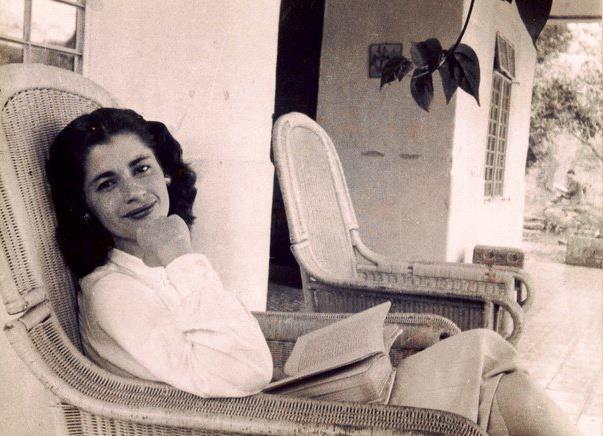
¿Por donde empezar?
Tal vez por darle gracias infinitas a la vida por la gente que ha puesto en mi camino, por la familia tan maravillosa que me ha dado y hoy más que nunca por la abuela tan extraordinaria que me dio.
Hoy se fue, pero se que al mismo tiempo siempre estará en la vida de cada uno de nosotros nietos e hijos. Es la primera vez que alguien tan cercano se me va y es la primera vez que escribo para una persona que se me va ó tal vez para misma, para nunca olvidar las incontables bendiciones de esta vida.
Pensando en "Mimi" no encuentro las palabras para describir las virtudes de esta mujer tan divina. Se que ella es un ser maravilloso simplemente porque lo único que puedo pensar al pensar en ella es en la paciencia y amor incondicional que nos daba. En las horas enteras que pasaba de rodillas sentada al lado de su torbellino de nietas ayudándonos a deshacer castillos, "cocinarnos" en ollas gigantes, armar pesebres, hacer conciertos y shows, desordenando su closet para jugar con toda su ropa y maquillaje, leyendonos cuentos y todo esto con una sonrisa y una cariño que me ha acompañado todos los días.
Era una devoción a todos nosotros. Recuerdo las visitas a Guatemala que caminabamos juntas hasta el supermercado a comprar su Coca-Cola y sus cigarrillos y siempre me compraba algún dulce ó algo sólo para malcriarme un poquito. Viajo a acompañarme y a ayudar a mis papás cuando nació mi hermanito. Una mujer absolutamente apasionada por consentir y darle amor a sus nietos, al abuelo divino y cada unos de sus hijos.
La recuerdo siempre leyendo algún libro y haciendo rompecabezas de dos mil piezas. Si eso no demuestra su paciencia además de aguantarnos a todas las primas con lo locas que somos no se que más lo hará! Haciendo rompezabezas hasta las dos de la mañana con su Coca-Cola en mano y si me veía despierta me invitaba a jugar solitario con ella. Nos enseñó a cada uno de los nietos a jugar rumi, también con una paciencia increíble.
Adoraba y admiraba a Gabriel García Márquez, lo conoció un día y recuerdo que fue uno de los momentos más emocionantes para ella. Él le regaló un libro autografiado y ella escribió una carta para él que nunca entrego. Si no era García Márquez igual siempre tenía algún buen libro en mano y tenía una caligrafía preciosa. Quisiera pensar que todavía tengo notas de cumpleaños y tarjetas en alguna parte en mi cuarto en Guatemala.
Mimi siempre olía rico. Una mezcla del cigarrillo con algún perfume delicioso que para mi era el olor a casa porque con ella me sentía siempre querida y apoyada. Y me atrevo a decir que mis primos y mi hermanito no fueron la excepción. Inclusive cuando ya no me reconocía más.
La vi por última vez hace dos meses en Bogotá y me dio un beso, dudo que supiera quien era yo pero una mujer tan fabulosa como ella inclusive cuando ya no estaba tan presente no hacía sino sonreír y decir cosas lindas, cantar, abrazar a sus peluches y darles amor. Le dije varias veces "Te quiero mucho Mimi linda" y un par de veces respondió "Ay si, yo también." Y eso es algo que mantendré en mi mente por siempre. Todas esas cosas que hizo con amor y paciencia por todos nosotros le dieron más y más impresiones positivas que la acompañaron y la seguirán acompañando en las siguientes aventuras trayendole felicidad a ella y todos los que tengan el privilegio de conocerla.
martes, 12 de marzo de 2013
The life of a genius; Beethoven
We constantly hear about the genius of Beethoven, but this is more evident when we get a chance to look a little more into his life, the hardships he underwent and how his genius saved him. If you're looking for something to watch over the weekend check out the BBC's documentary on his life. Enjoy!
1/3
2/3
3/3
viernes, 8 de marzo de 2013
International Women's day: song of the day
Happy International Women's Day to all of you!
This date inspired me look up a couple of Latin American women composers, and my pick of the day is the Mexican composer María Grever.
Having studied a little bit about female lied composers I realized I didn't really know any Latin American art song composers and that had to change. Obviously I had heard many of María Grever's songs, but with my ignorance I always associated these songs with big names like Agustin Lara among others. Of course the reasons why I made this assumption are not good, and I want to dedicate my life to change this.
There are amazingly talented and equally powerful and expressive female composers, the reasons why they are not as prominent as male composers starts with the simple fact that we actually have to say "female composers", because the realm of composition is commonly associated with men. And this is due to many reasons starting with women's access to formal music education, lack of family and professional support to women composers, and a general idea that women composers are just not as good as men, because we rarely here about them.
Music History text books rarely talk about women composers, because they weren't as prominent. But why weren't they? Who writes history? Who compiles music anthologies?
So they exist in Latin America, and they are wonderful just like Clara Schumman or Fanny Mendelssohn were in Europe. So I invite everyone, especially women to go beyond our textbooks and listening lists on our syllabi, because this change will only happen if we are proactive and look for this information that is not given to us.
So now, back to the pick of the day.
María Grever. I won't pretend to be an expert on her music and biography so please go to: http://www.wildwomenofsong.com/downloads/wwos_mariagrever.pdf
The song I picked is "Mi secreto" of Grever herself singing. It's an old recording, but what a better way to get an idea of her beautiful mind than by hearing herself interpreting the piece. Even though she was known mostly for her Latin American boleros, this song has more cosmopolitan sound to it. I can hear in it a little bit of the contemporaneous cabaret style of France, as well as a very distinct Latin American sound. Please enjoy and let me know what you think. If you have more names you think I should explore I am more than open!
Happy International Women's day! http://www.guardian.co.uk/music/2011/mar/13/london-oriana-choir-women-composers
This date inspired me look up a couple of Latin American women composers, and my pick of the day is the Mexican composer María Grever.
Having studied a little bit about female lied composers I realized I didn't really know any Latin American art song composers and that had to change. Obviously I had heard many of María Grever's songs, but with my ignorance I always associated these songs with big names like Agustin Lara among others. Of course the reasons why I made this assumption are not good, and I want to dedicate my life to change this.
There are amazingly talented and equally powerful and expressive female composers, the reasons why they are not as prominent as male composers starts with the simple fact that we actually have to say "female composers", because the realm of composition is commonly associated with men. And this is due to many reasons starting with women's access to formal music education, lack of family and professional support to women composers, and a general idea that women composers are just not as good as men, because we rarely here about them.
Music History text books rarely talk about women composers, because they weren't as prominent. But why weren't they? Who writes history? Who compiles music anthologies?
So they exist in Latin America, and they are wonderful just like Clara Schumman or Fanny Mendelssohn were in Europe. So I invite everyone, especially women to go beyond our textbooks and listening lists on our syllabi, because this change will only happen if we are proactive and look for this information that is not given to us.
So now, back to the pick of the day.
María Grever. I won't pretend to be an expert on her music and biography so please go to: http://www.wildwomenofsong.com/downloads/wwos_mariagrever.pdf
The song I picked is "Mi secreto" of Grever herself singing. It's an old recording, but what a better way to get an idea of her beautiful mind than by hearing herself interpreting the piece. Even though she was known mostly for her Latin American boleros, this song has more cosmopolitan sound to it. I can hear in it a little bit of the contemporaneous cabaret style of France, as well as a very distinct Latin American sound. Please enjoy and let me know what you think. If you have more names you think I should explore I am more than open!
Happy International Women's day! http://www.guardian.co.uk/music/2011/mar/13/london-oriana-choir-women-composers
jueves, 7 de marzo de 2013
Women's contribution to Lied
When
we have to ask ourselves “what contributions did women composers have
on the development of such an important and prolific genre as German
Lied” there is already an issue that comes to mind; the fact that
women’s work and contribution in the past were not recognized on equal
terms as those of men and were assumed to be different or in many cases
nonexistent. However it is not something new for women’s contribution to
culture to be ignored or relegated to domestic or second class
contributions, unworthy of public appearance or even mention in history
and musicology books.
The
Nineteenth Century for women composers and musicians was a crucial time
in history for women, not because there had not been women musicians in
the past, but because of the socio-economic and technological changes
in Germany and other parts of Europe that allowed more women to study,
perform and compose music. The Industrial Revolution, together with the
development of the pianoforte were key in allowing middle and
upper-class women access to music performances, pianofortes, more
participation in private performances, and in a few cases advanced music
education and public performances.
Up
untill the second half of the Eighteenth Century women had been overtly
described and seen as inferior by important figures such as Jean-Jacque
Rousseau, who in his treatise Émile described
women as lacking creativity and genius. Of course these claims came
from men who were unaware or disregarded the immense difference between
the opportunities men and women had to develop creativity and genius.
Women’s lack of participation and recognition in music was seen as a
“proof of their biological inferiority” by men like Havelock Ellis who
studied sexuality from a physician's point of view. There was also the
issue of censorship of women’s works by men, a fact that sometimes
forced women to pass as men in order to be published or be heard.
Drastically smaller in number because of the obstacles above mentioned,
many works by women in the Romantic period are comparable in quality,
virtuosism and expressiveness to those of men. What made the Nineteenth
Century a turning point in music history and, in particular, in the
history of women participation was in part the expanding middle class
and the invention of the pianofortes. “Women
began to cultivate their talents and tastes as amateur musicians. They
had leisure to practice the piano and sing, and they began to provide an
important market for music publishing companies, composers and piano
makers..." (Gorrell)Women’s amateur music making in a domestic setting had long been accepted in Germany and it certainly increased with the widespread presence of pianofortes in middle-class homes. Women were in charge of entertaining guests and family by either performing themselves or organizing soirées, like the famous Sunday sessions the Mendelssohn family would host where both Fanny and Felix would play for a small audience. The difference between Fanny and Felix, was that for Felix this was only entertainment and not the limit of his musical life, while Fanny was kept for the most part from performing in public outside these soirées and publishing her works under her name.
Independently
of the role of women, the importance of this soirées in the context of
the Nineteenth Century lied is that “it was in the intimate setting of
the middle-class home that the lied was performed..." (Gorrell) In the beginning
of the Nineteenth Century women were now “becoming an important segment
of the public that was replacing the nobility as prime patron of the
arts." (Gorrell)
Women
were also now exposed to music more often than before through concert
subscriptions in cities like Liepzig, home soirées, and by having more
access to pianofortes and musical scores. Women were able to learn the
music and some of them experimented with melodies and taught themselves
how to compose, some others like Fanny Hensel or Clara Wieck had the
advantage of coming from musical families and receiving music education
from members of their family from an early age.
Relegated to the roles of housewives these two women, who are two of
the few well known Romantic female composers, were kept from developing
to their full potential like men in their families did. Clara Wieck, for
instance, began her musical studies with her own father who taught her
piano and composition, encouraging her to compose and perform her own
music. She was a child prodigy and an amazing mature pianist, however
when she married Robert Schumann, with whom she had eight children, she
had limited time to practice and compose herself as she had to take care
of the family. Additionally, Schumann did not allow her to play while
he was composing. He “was reluctant to share her with the rest of the
world and also did not wish to live in her artistic shadow.” (Gorrell)Most concert pianist in the beginning of the Nineteenth Century would include at least one composition of their own on a program and Wieck was not the exception having been encouraged by her father to do so from an early age. Despite this support and encouragement, she received from her father, she lacked confidence in her skills and musical abilities, which is understandable given the general attitude towards women in the arts, and the strict expectations of women to fulfill their duties and responsibilities at home with their family. She said:
I
once thought that I possessed creative talent, but have given up this
idea; a woman must not desire to compose - not one has been able to do
it, and why should I expect to? It would be arrogance, though indeed, my
Father led me into it in earlier days. (Gorrell)
However,
Wieck was a fortunate woman for the time to have the education and
support from her father and to a certain extent of her husband as well.
Schumann despite being controlling of Wieck said that “children and a
husband... do not go well with composition. [Clara] cannot work at it
regularly, and I am often disturbed to think how many tender ideas are
lost because she cannot work them out.” (Gorrell) Having listened to many of
Wieck’s compositions Schumann decides to publish a volume of lieder
together.
Wieck’s
song style is “sophisticated and challenging, illustrating not only her
talent but the quality of her musical education. She possessed a rich
and varied harmonic vocabulary, and her piano figurations are
pianistically well conceived." (Gorrell) Her lied works could undoubtedly be
compared to that of any other composer at the time as she followed the
style of the time. Just like her husband Schumann, her lied compositions
were known for the independence of the vocal lines and piano, with both
playing different expressive functions within the same story. She would
use the piano to expand on what the voice was stating, or to explore
the depth the story by drawing a picture of the places and moods the
poem would go through that were not necessarily expressed in the text.
She would do this by means of harmonic structure or word painting.
Wieck’s
experience is definitely a privileged one compared to so many other
women we do not even hear about nowadays and whose works never were
recorded or kept by their families or patrons. Fanny Hensel in the other
hand had a similar musical education, but as she matured as a woman and
a musician obstacles began to appear in her life. She did not receive
the same support from her family for publishing her works as her brother
Felix Mendelssohn did, despite the fact that her music had been
complemented by personalities of the time such as Johann Wolfgang von
Goethe and their teacher, Carl Friedrich Zelter.
Mendelssohn,
however, admired her sister’s work and decided to publish some of her
compositions on two of his publications, however with no attribution to
Hensel. “Both collections received favorable reviews after their
publication, and critics usually cited Fanny’s songs as being
particularly lovely.” Publishing under somebody else’s name like Hensel,
sharing a publication with a renowned composer like Wieck, or being
endorsed by a renowned male composer were the main ways in which women
managed to get their works published and develop their careers as
composers.
Josephine
Lang for instance is known today because she was endorsed by
Mendelssohn. "Although his endorsement may be the primary reason that
she has not been forgotten, and examination of her music should secure
her a respectable place in the history of the art song." (Gorrell)
Despite
the common discouraging attitude towards women development in the high
art of composition the women above mentioned along with other such as
Luise Reichardt and Corona Schröter had a great number of compositions
to contribute to the Lied repertoire with their own individual voice in
the same genres and styles as their male contemporaries.
Despite
the changes in attitude towards women’s participation in the high arts
nowadays, history has been written by those in power, and music recorded
and published by them as well. Our goal as female music students,
performers and academics should be to dig deep, be proactive in our
search for repertoire and sources to learn about the history of music
that even today is neglected in history courses and books. Even today
“the canon of excellence in western art music includes no female Bach,
Beethoven, or Mozart... [which] perpetuates the bastion of innate male
superiority.”
Sources:
Bowers, Jane M, and Judith Tick. Women making music : the Western art tradition, 1150-1950. Urbana: University of Illinois Press, 1986.
Gorrell, Lorraine. The nineteenth-century German lied. Pompton Plains, NJ; Milwaukee, Wisc.: Amadeus Press ; For North American sales, Hal Leonard Corporation, 2005.
Reich, Nancy B. Clara Schumann : the artist and the woman. Ithaca [N.Y.]: Cornell University Press, 2001.
Tillard, Françoise. Fanny Mendelssohn. Portland, Or.: Amadeus Press, 1996.miércoles, 6 de marzo de 2013
"Má vlast: The Moldau" - Bedrich Smetana.
Today's pick is "Má vlast: The Moldau" by Bedrich Smetana.
I simply love it, but as I learned more about the piece and Czech Nationalism I came to appreciate it even more. Nationalism was an impulse to unify people by creating a national identity through common language, tradition and institutions. In Czech nationalism as well as many other expressions of nationalist music in other countries, composers used folk songs and folk tales for their plots, and compositions.
There were two main currents in Nationalism; the nationalists and the westernizers.
Smetana was a nationalist, meaning he was interested in expressiveness and simplicity in the music rejecting western techniques like counterpoint.
In "Má vlast: The Moldau" you can hear rhythms and melodies that reflect Czech people of the time. It might sound more complex that just a folksong, but compared to what other composers such as Dvorak were working on this was simpler and closer to the country's roots.
Enjoy!
La obra que escogí el día de hoy es "Má vlast: The Moldau" del compositor checo Bedrich Smetana.
Me fascina, pero cuando aprendí acerca del nacionalismo checo aprendí a apreciar aún más lo que esta música significa. El nacionalismo fue un impulso de unificar al pueblo creando una identidad nacional por medio de un idioma común, tradiciones e instituciones. En el nacionalismo checo como en el de otros paises los compositores compusieron y usaron canciones populares, cuentos y la misma historia para escribir sus libretos y componer música.
Hubo dos corrientes principales en el nacionalismo, los occidentalistas y los nacionalistas. Smetana fue un nacionalista lo cual quiere decir que se interesaba más en la expresividad y simplicidad de la música rechazando entonces las tecnicas de composición occidentales como el contrapunto entre otras.
En "Má vlast: The Moldau" se pueden escuchar ritmos y melodias que reflejan tradiciones checas de ese entonces. La música puede sonar más compleja que una simple canción popular, pero comparado con otros compositores de la epoca como Dvorak, la música de Smetana refleja los sonidos checos de una manera más popular.
lunes, 7 de mayo de 2012
Reflections on ethnographic works
The act of writing an ethnography can be seen as the presentation of observations gathered through fieldwork, and the successful ethnography is that which creatively explores ways of recreating the experience of the field. An ethnography or anthropological text becomes a vehicle for anthropologists to give meaning to what was observed in the field. According to Rabinow these “ ‘facts’ of anthropology, the material which the anthropologist has gone to the field to find, are already themselves interpretations” (Richards).
“Doing ethnography is like trying to read a manuscript - foreign, faded, full of ellipses, incoherencies, suspicious emendations, and tendentious commentaries, but written not in conventionalized graphs of sound but in transient examples of shaped behavior.” (Geertz) Therefore, a successful ethnography will go beyond the categories of the ethnographer to recreate life as experienced in the field. Anthropological “fieldwork is the distinctive method to collect data, but anthropology is the means to carry home, as it were.”(Hastrup)
“The anthropological text is a controlled communication that the author uses to persuade or critique, invent, justify, or reaffirm a theoretical position” (Gudeman & Rivera). Therefore it is important to pay significant attention to the analysis of the ethnography itself, “the figures and metaphors, the historical position of the ethnographer and its impact upon the text produced, and the shifting, reflexive relation between observer and observed” (Gudeman & Rivera).
In this way, anthropology is not an objective experimental science in search of a law, but an interpretive one in search of meaning (Geertz). It is more like art or discourse through which we try to make sense of the experience in the field. “If you want to understand what a science is, you should look in the first instance not at its theories or its findings, and certainly not at what its apologists say about it; you should look at what the practitioners of it do” (Geertz). In anthropology practitioners do ethnographies, so we have to understand what an ethnography is. Ethnographic texts describe something observed, give meaning to actions or practices registered by means of a “thick description”, a description of a human behavior that registers not just the behavior, but the complex context as well so that the behavior can become meaningful to an outsider. (Hastrup)
The “experience in itself is not necessarily creative. To be so it has to be transformed and mediated, and we are back at the problem of how to transplant life from context to text in a way which does not kill it” (Hastrup). And it is with the goal of giving meaning to the actions and practices observed, that anthropologists come up with new words, resort to storytelling or become artists in order to create another dimension that cannot be seen through the lenses of our own culture.
The use of creative vehicles to recreate field experiences is not meant to represent facts. For instance the “storytelling that thrives for a long time in the milieu of work... does not aim to convey the pure essence of the thing, like information or a report. It sinks the thing into the life of the storyteller, in order to bring it out of him again” (Benjamin). “But according to recent "textualists, [like Geertz]" the claim to have had the "experience" of "being there" is itself a rhetorical figure, a culturally and historically dated ideology used to justify the authority of the text in which it appears (Gudeman & Rivera). But it is through fieldwork, through engaging in real conversations, that the ethnographer has the opportunity to recognize a discourse constructed in ways that sheds new light, that challenges, that enriches her own stories, her own texts and, if creatively used, will enrich the conversations from the past and the ones being registered in the ethnographic text.
Hastrup makes a distinction between being a writer, or being an author to describe the task anthropologists have. She explains that a writer simply states the facts observed, while the author finds creative ways to explain the field experience through “thick description”. However, it is important to understand that “the author does not write fiction even though he creates reality. The border between fiction and creation may be difficult to draw, but the point is that the author of ethnographic texts ha[s] internalized an alien (un-)reality, which he [or she] then externalize[s] in the aim of making it accessible” (Hastrup).
In the early twentieth Century, Malinowsky presented the idea that isolating oneself of one’s culture and completely diving into the native culture generated a better and deeper understanding of the culture studied. Later Rabinow critiqued this approach stating that not only the ethnographer is “learning about the informant’s culture, but the informant as well sees a glimpse of his culture as viewed by an outsider” (Richards). In this way the ethnographer impacts the people she engages with while doing fieldwork and generates changes of which she should be aware, while at the same time in the best examples, the ethnographer understanding and conversation is enriched.
This occurs both to the outsider and the insider, just like fish immersed in the water, we seldom objectify our own culture. When we mirror ourselves in others and allow to view ourselves from and with the other’s point of view, we become aware of the metaphors, the very universe of meaning that provides us with and identity and our communities with a history and a future. With this in mind Rabinow recognizes that “both the anthropologist and his informants live in a culturally mediated world, caught up in ‘webs of significance’ they themselves have spun. This is the ground of anthropology; there is not privileged position, no absolute perspective, and no valid way to eliminate consciousness from our activities or those of others” (Richards).
And it is not a one way street. Like in any conversation, both interlocutors are changed. The creativity or rhetorical forms used by anthropologists is now receiving more attention as one argument states that anthropologists draw upon their “own culture’s form of persuasion and canons of expository style, [which] significantly control the way one culture ‘reads’ another” (Gudeman & Rivera). Not only do ethnographers try to categorize or pigeonhole the experiences based on their own, but the culture being observed already has their own models that describe their reality.
Fieldwork can also change the original hypotheses and theories anthropologists bring to the field. Observations made in the field can overflow definitions, concepts and theories forcing anthropologists to redefine old terms or use new ones to describe what was observed. This is the case of “Conversations in Colombia” where the economics notion of means of production is overwhelmed by the local notion of “base”. The ethnographer explores the local notion and contrasts it with the “Western” or the academic notions originally used to frame field observations, enrich our understanding or both. The process of writing an ethnography is then a process of “sorting out the structure of signification” (Geertz). Not only the structures found in the fieldwork, but that of the practitioners themselves.
Anthropologists then need to be prepared to switch their objects of study or modify and create categories, as the observations in the field and the local explanations, metaphors, models and universes of meaning illuminate the original notions or challenge and displace them. Ethnographers assume that categories and models are not universal, including the generalizations and universals notions of the discipline which are understood as yet another cultural product. With this understanding, both the ethnographer’s as well as the local assumptions and conceptual frameworks can be better understood. “Ultimately, the aim of the anthropologist is not to prove, but to understand. However, what anthropologists view as the path to understanding has changed considerably over time” (Richards).
Sources:
Benjamin, Walter. “The Storyteller”, n.d. http://www.slought.org/files/downloads/events/SF_1331-Benjamin.pdf.
Geertz, Clifford. The Interpretation of Cultures. New York, 1973.
Gudeman, Stephen, and Alberto Rivera. Conversations in Colombia : the Domestic Economy in Life and Text. Cambridge; New York: Cambridge University Press, 1990.
Hastrup, Kirsten. “The Challenge of the Unreal - of How Anthropology Comes to Terms with Life.” In Culture and History. Copenhagen, 1987.
Richards, Rebekah. “Changes in Anthropology Fieldwork over Time.” Blog. Anthropology @ Suite 101, January 30, 2010. http://rebekahrichards.suite101.com/changes-in-anthropology-fieldwork-over-time-a195889.
martes, 27 de septiembre de 2011
sábado, 9 de julio de 2011
Lamento la violencia que nos mata día a día, y el gran trovador que hoy hemos perdido

Como guatemalteca me siento muy conmovida por la violencia que se vive cada día en el país, y por supuesto por el asesinato de Facundo Cabral hoy en la madrugada. Además que como música me conmueve profundamente el que un mensajero de paz y un talento como el suyo allá caído en manos de la violencia que impunemente destruye nuestro país.
Invito a todos los seguidores de esta página que compartan estos sentimientos a participar en el concierto dedicado a Facundo Cabral y en contra de la impunidad y la violencia, hoy en la plaza 11 de Marzo, zona 4.
Además habrá manifestaciones el día de mañana. El lugar que se ha sugerido es la Plaza de la Constitución y se pide que todos vistan de negro. Los mantendré al tanto.
"Siempre, con lo que tengas, se puede, se debe empezar de nuevo. Tenemos el deber de ser felices". Facundo Cabral
Obituario en El Clarín
Suscribirse a:
Entradas (Atom)